Grease Removal for Drains in Tyler, TX
Cooking fats, oils, and grease (FOG) coat the interior walls of kitchen waste pipes, solidifying into dense sludge that traps food particles and causes severe fixture clogs. Professional clearing restores free flow without chemical pipe damage.
We connect callers with independent local contractors. Availability, credentials and price are confirmed with the contractor before work begins.
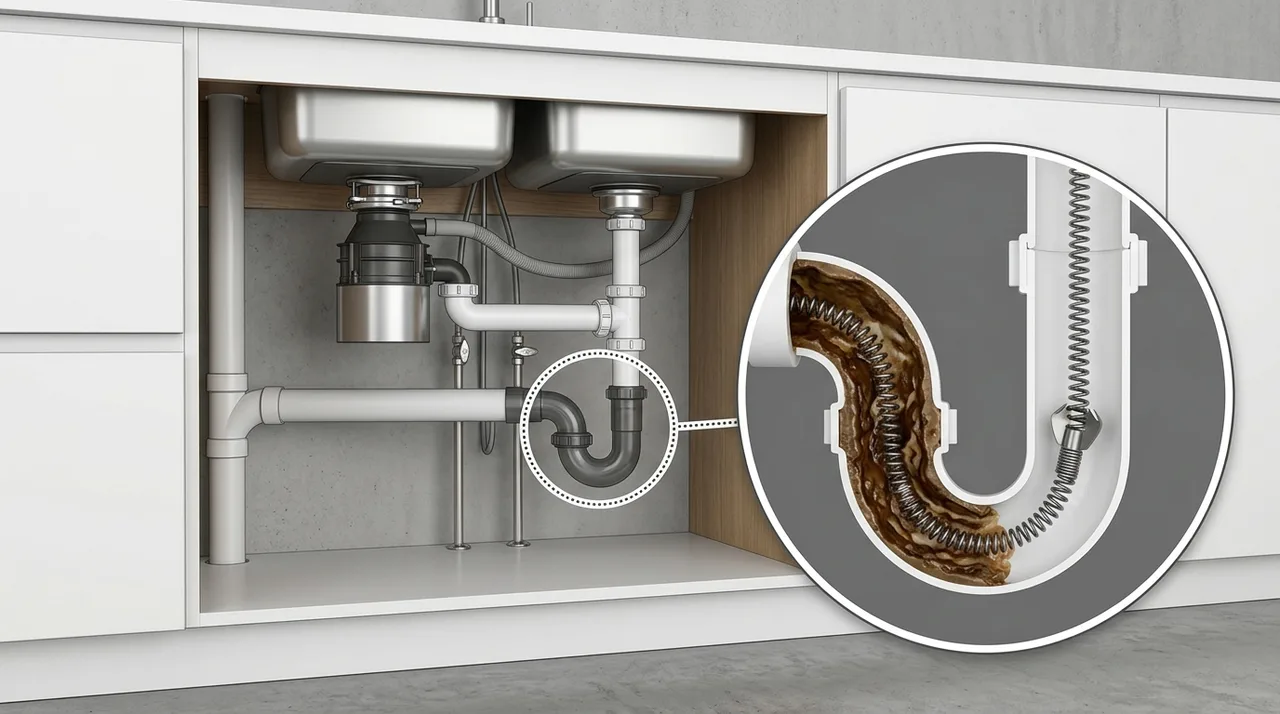 Solidified grease and cooking fats coat internal drain walls, narrowing waste lines until sinks back up.
How Household Kitchen Grease Blocks Waste Lines
When warm grease, bacon fat, butter, or cooking oils wash down a kitchen sink, they appear to flow easily as liquids. However, as wastewater encounters cold underground pipes, temperatures drop rapidly. Fats, oils, and grease (commonly referred to by municipal water authorities as FOG) congeal along pipe walls.
Over months and years, these deposits build inwards like plaque in an artery. Starchy foods from garbage disposals, soap residue, and dish detergents cling to the sticky grease coating, eventually restricting water flow to a sluggish trickle or an airtight blockage.
Typical Kitchen Sink & Disposal Symptoms
Grease blockages display recognizable symptoms before a full stoppage occurs:
- Sluggish Kitchen Sink Drainage: Water pools in the sink basin and takes minutes to drain away after washing dishes.
- Gurgling from Disposal or Adjoining Basin: Running water in one side of a double-basin sink produces bubbles or gurgling in the other side.
- Foul Sour Odors: Decaying organic matter trapped in the grease layer produces persistent sour odors from the sink strainer.
- Dishwasher Backups: Water backs into the bottom of the dishwasher or out through the countertop air gap when the appliance cycles.
Why Store-Bought Chemical Cleaners Fall Short
Many homeowners reach for store-bought liquid drain openers when kitchen sinks back up. While chemical products may open a tiny pinhole through warm grease, they carry significant drawbacks:
- Corrosive Reactions: Strong lye or acid formulations generate intense exothermic heat that can warp PVC pipes and soften solvent welds. In older Tyler homes with vintage cast iron, repeated chemical exposure accelerates pipe corrosion.
- Temporary Relief: Chemicals burn a small channel through the bottom of the grease plug, leaving thick deposits along the walls that quickly collect food and re-clog within weeks.
- Safety Hazards: When chemicals fail to clear the blockage, your sink fills with caustic liquid, creating skin and eye hazards for anyone taking apart the P-trap.
Professional Grease Clearing Techniques
Independent drain cleaning specialists assess the location and density of the grease accumulation before selecting the proper clearing method:
- P-Trap and Waste Arm Cleaning: Mechanical disassembly of the under-sink trap to manually remove sludge cakes and inspect garbage disposal baffles.
- Mechanical Snaking with Grease Cutters: Motorized cables fitted with specialized scraping blades that scour grease off the inner walls of the 1.5-inch or 2-inch kitchen branch line.
- Mini Hydro Jetting: For long kitchen waste runs or recurring heavy grease lines, targeted water jetting emulsifies fatty deposits and flushes them completely into the main sewer line.
Preventing Future Kitchen Drain Blockages
Simple preventive habits protect kitchen plumbing from recurring grease stoppages:
- Pour warm cooking oils and bacon fat into a designated container (such as a metal can) and dispose of it in household trash once cooled.
- Wipe greasy frying pans and plates with a paper towel before washing them in the sink or dishwasher.
- Avoid putting fibrous vegetables, coffee grounds, eggshells, or potato peels into the garbage disposal.
- Flush kitchen drains with hot water and mild dish soap after heavy cooking sessions to help keep waste lines clear.
Frequently Asked Questions About Kitchen Drain Grease
Can hot water and dish soap dissolve a complete grease blockage?
While hot water helps dissolve light oil coatings near the drain entrance, once grease has solidified deeper in the underground branch line, hot water cools before reaching the clog and will not clear a complete stoppage. Mechanical cabling or jetting is typically required.
Do you service commercial restaurant grease lines?
Our phone referral network primarily serves residential kitchen lines. For commercial food service facilities requiring specialized grease trap pumping and manifest documentation, independent contractors confirm their commercial service capabilities during phone intake.